PM-26-005
PROJECT RECORD · PM-26-005
Vintage Dobbs Fedora to Pork Pie
The First Sword
This Dobbs fedora restoration transformed a vintage Dobbs fur-felt fedora became the first completed hat project in the workshop through an iterative process of steam reshaping, wear testing, refinement, liner replacement, and an unexpected trim solution. Although it was the fifth project number assigned, PM-26-005 became the first finished hat to carry the Maker’s Sword.
Project Overview
Project: PM-26-005
Type: Renovation
Maker: Dobbs
Material: Genuine Fur Felt
Factory Size: 60 / 7½
Started: July 2026
Completed: August 10, 2026
Outcome: Completed With Changes
Disposition: Personal Collection
Acquisition: $55.25 delivered
I purchased the hat as a sound vintage fur-felt fedora that could provide hands-on experience with reshaping a finished hat. The goal was to turn it into the lower-crowned pork-pie style I prefer while learning how vintage felt responded to steam, blocking, crown shaping, brim work, and repeated handling.
Starting Point
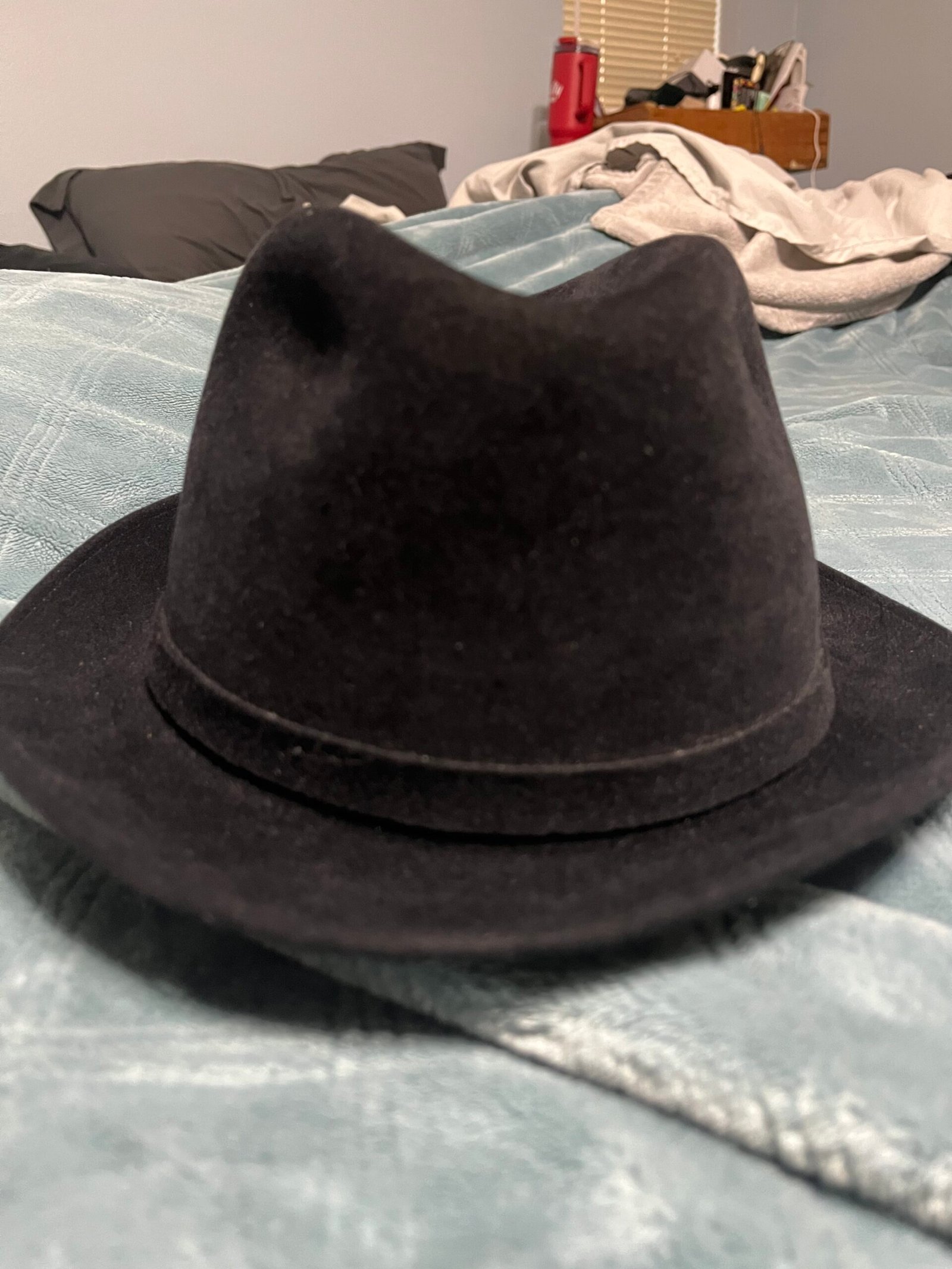
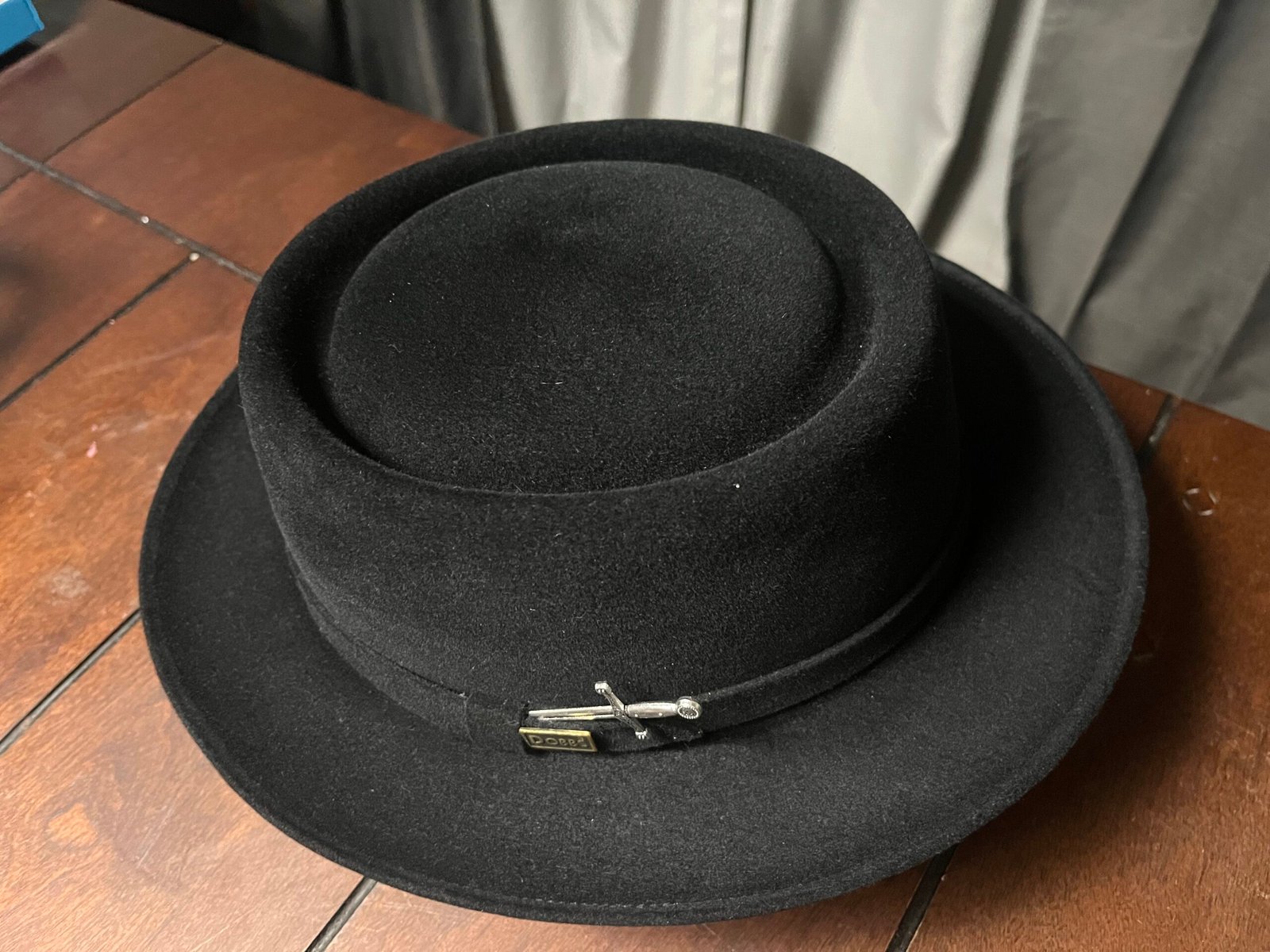
The original hat was a black Dobbs fedora with a center-dent style crown and front pinches. Rather than a conventional ribbon treatment, it carried a narrow black self-felt band cut from matching felt, with a small metal Dobbs ornament on the wearer’s left side.
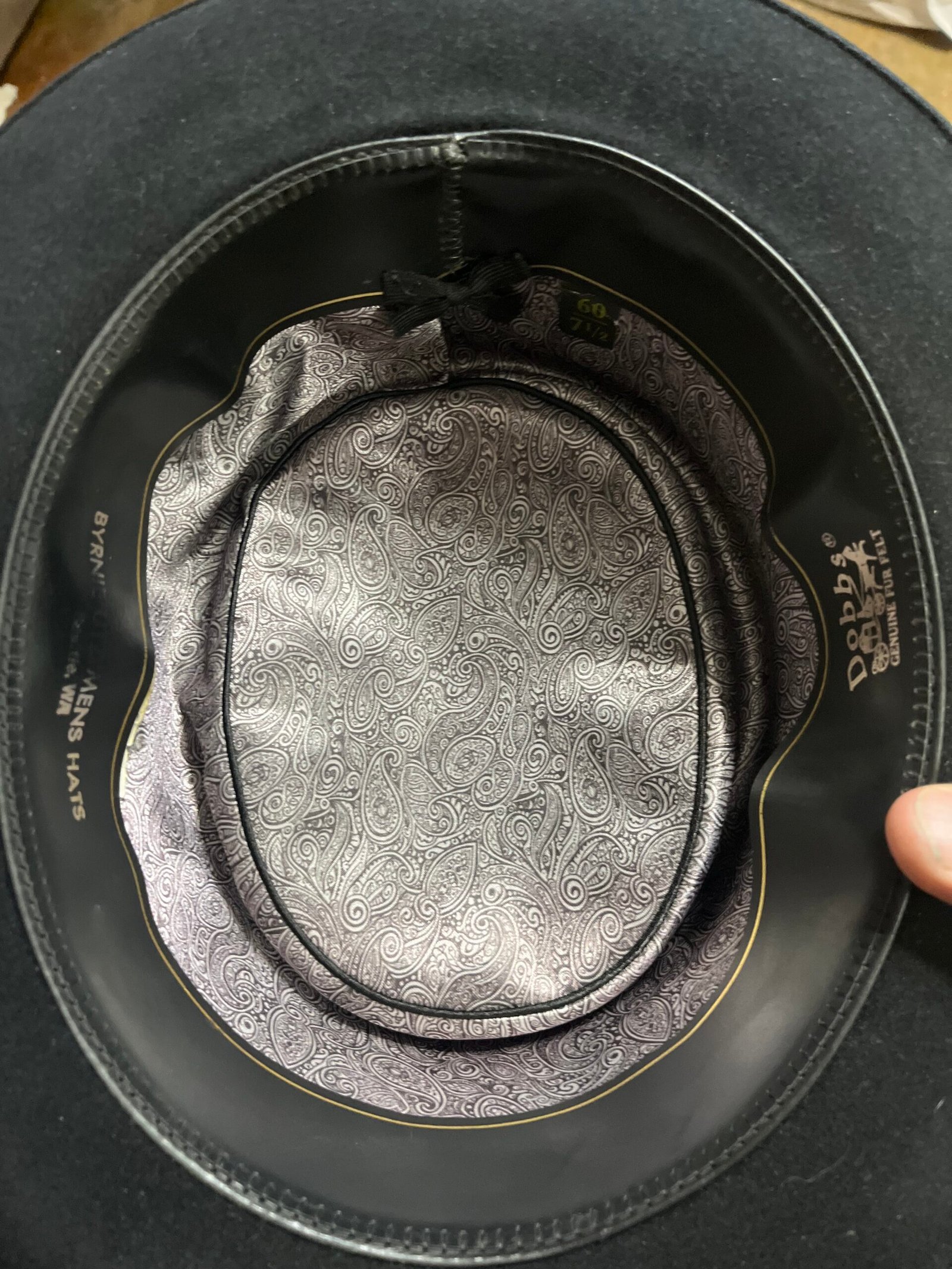
The hat was structurally sound and retained its original leather sweatband and cream Dobbs liner. Nothing about its condition required a restoration to its original form; it was deliberately selected as a renovation and learning project.
Original Construction and Markings
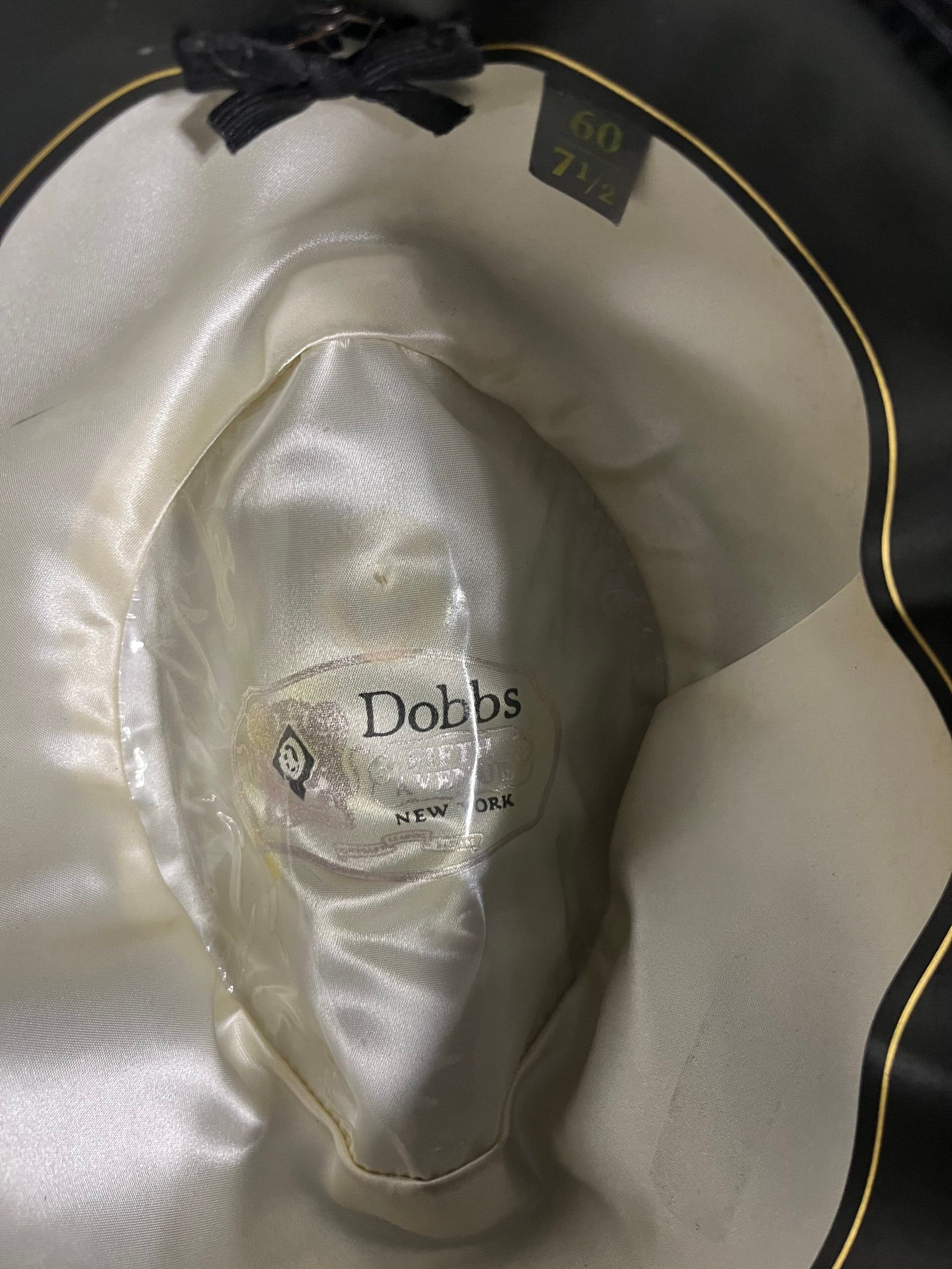
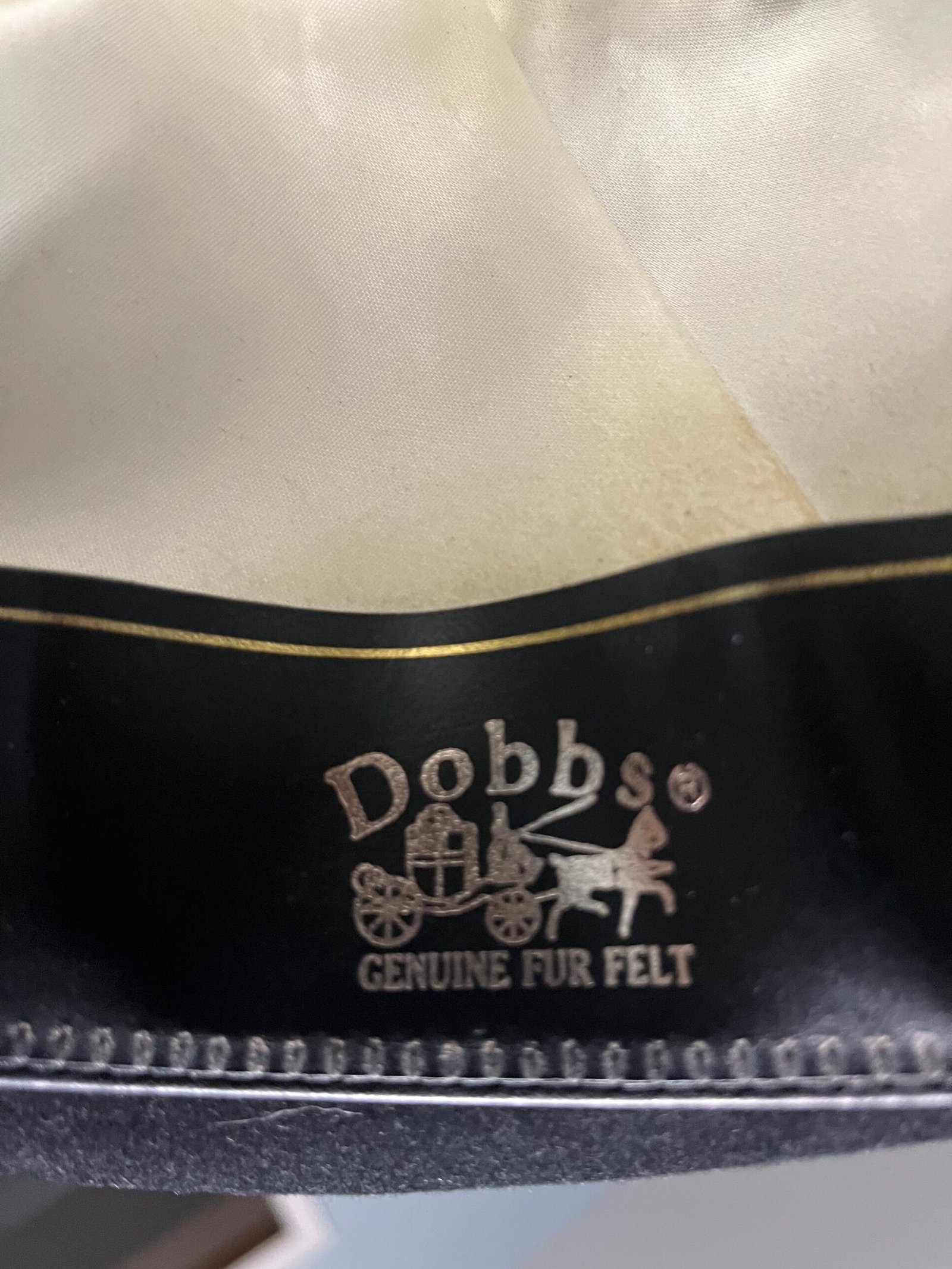
The factory size tag is marked 60 / 7½, and the sweatband identifies the hat as Genuine Fur Felt. The original interior also carries Dobbs branding and the retailer imprint for Byrnie Utz Men’s Hats in Seattle, Washington.
Opening the Crown
The first major step was to remove the existing fedora crease and return the crown toward an open form. I removed the liner and the decorative band. I had to use steam to soften the glue holding in the liner. Using steam from the ST-750 steam boiler iron, I then softened the finished felt and placed the crown over an appropriately sized open-crown block.
I did not use a blocking cord. The objective was not a conventional full blocking operation, but to reopen and stabilize the existing crown so it could accept a completely different crease. I wasn’t trying to set a new brim break, but preferred to keep the old one. The hat was allowed to dry on the block before further shaping.
Workshop Observation — WO-001
A finished vintage felt crown can be reopened with steam and an appropriately sized open-crown block without a blocking cord when the objective is to remove an existing crease and establish a stable open crown for reshaping.
First Shaping
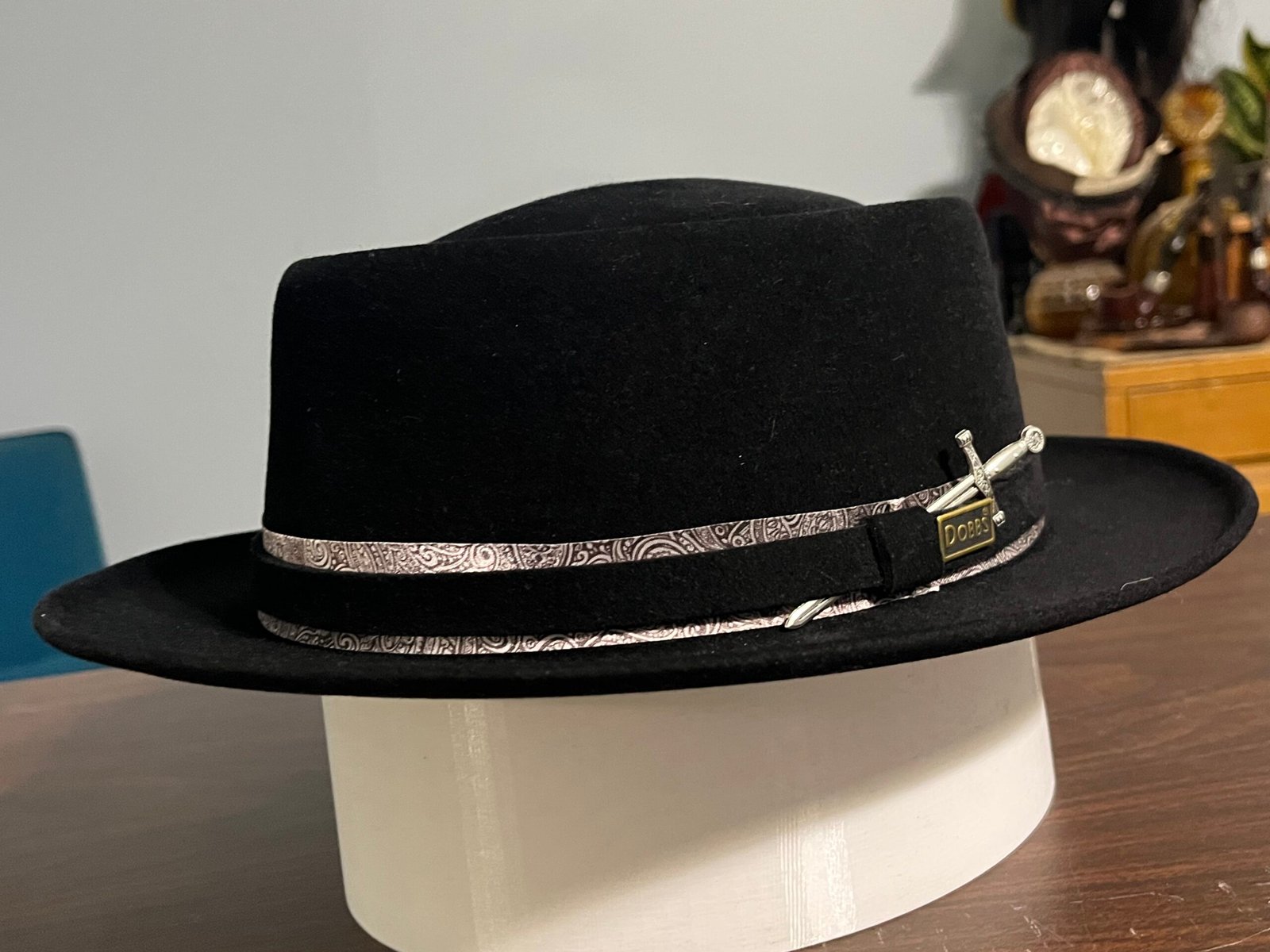
Once the crown had dried open, I formed an approximately 3½-inch telescope crown and reshaped the brim into the uniform upturned treatment I wanted for the pork pie. The original black self-felt band was retained, and the Maker’s Sword ornament was added to the exterior trim.
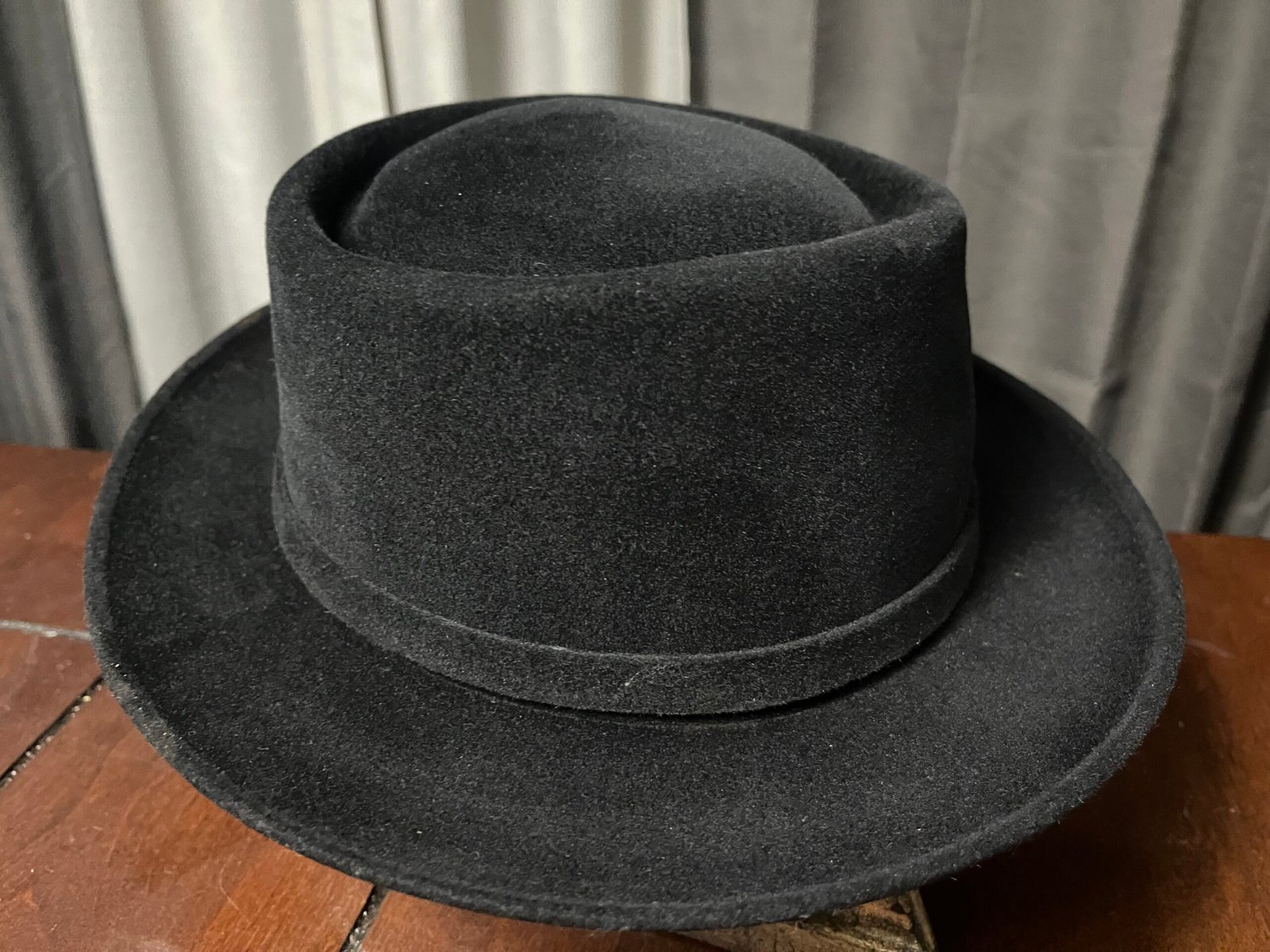
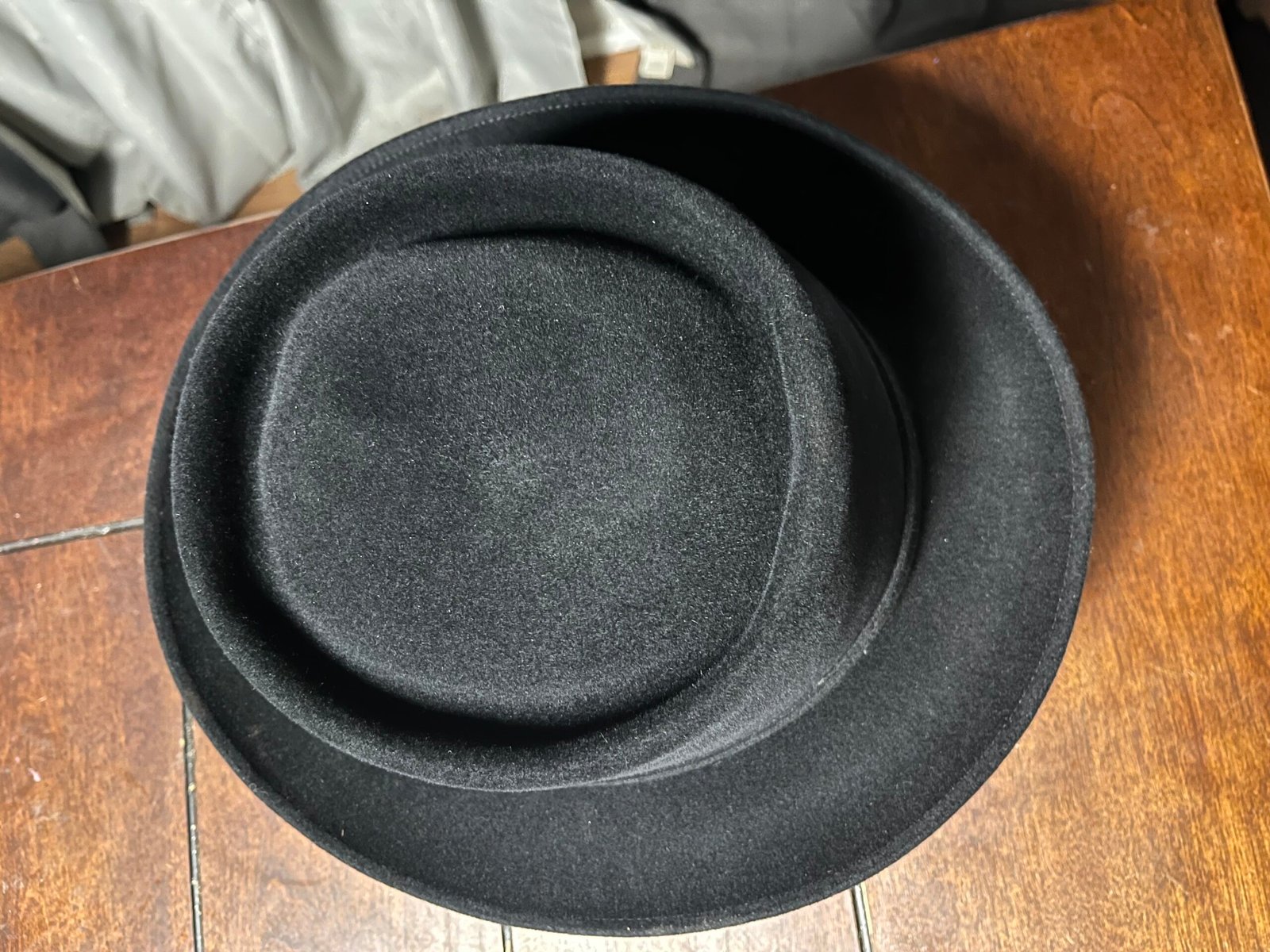
The First Wear Test
The first shaping looked finished on the workbench, but wearing the hat the following day exposed two problems. The brim was not holding the shape I wanted, and I was not satisfied with the uniformity of the telescope crease.
Rather than accept the first result, I returned the hat to the workshop for another round of steam and shaping. That became one of the most useful lessons from the project: a hat that looks finished while sitting on a stand may reveal different problems when it is actually worn.
Back to the Workshop
The second shaping concentrated on bringing greater consistency to the telescope crease and improving the brim treatment. The crown became noticeably more controlled and uniform after the additional work. I used a brim flange for the brim curl and gave it more time under the iron and steam, as well as more drying time. This helped to set the brim into shape.
The Liner Problem
The next issue had nothing to do with the exterior shape. The original Dobbs liner was intact, but the plastic-covered center of the liner rested against my shaved head. It made my head sweat and simply felt uncomfortable.
I removed the original liner and wore the hat without one while waiting for a replacement. Surprisingly, I found the unlined hat quite comfortable.
An Unintended Impression
While wearing the nearly all-black version of the hat, several people independently asked whether I was a rabbi or Jewish, Mormon, or Amish. The significance was not whether the hat objectively belonged to any of those traditions, but that different people were repeatedly reading the design in ways I had not intended.
That told me the uninterrupted black treatment needed another visual element.
The Replacement Liner
The replacement liner provided that solution unexpectedly. Because the pork-pie crown was considerably shorter than the liner had been made for, I trimmed approximately one inch from the lower edge around its circumference before installing it.
An Offcut Becomes the Solution
The trimming left a long strip of the same silver paisley material used in the new liner. Rather than discard it, I measured it around the crown, hand-sewed it into a continuous band, and installed it beneath the original Dobbs self-felt band.
The new accent broke up the solid-black exterior while preserving the original Dobbs trim. It also created a direct visual relationship between the inside and outside of the hat: the decorative exterior band came from the same material as the replacement liner.
The First Sword
PM-26-005 was the fifth project number assigned, but it became the first hat project I completed. It was also the first completed hat to carry the sword ornament I intend to use as a recurring signature on hats I make.
The sword did not begin with this hat. Its geometry had already been incorporated subtly into the central ornament of The Workshop Ledger’s full masthead as a small visual Easter egg. On PM-26-005, that symbol became a physical part of a finished hat for the first time.
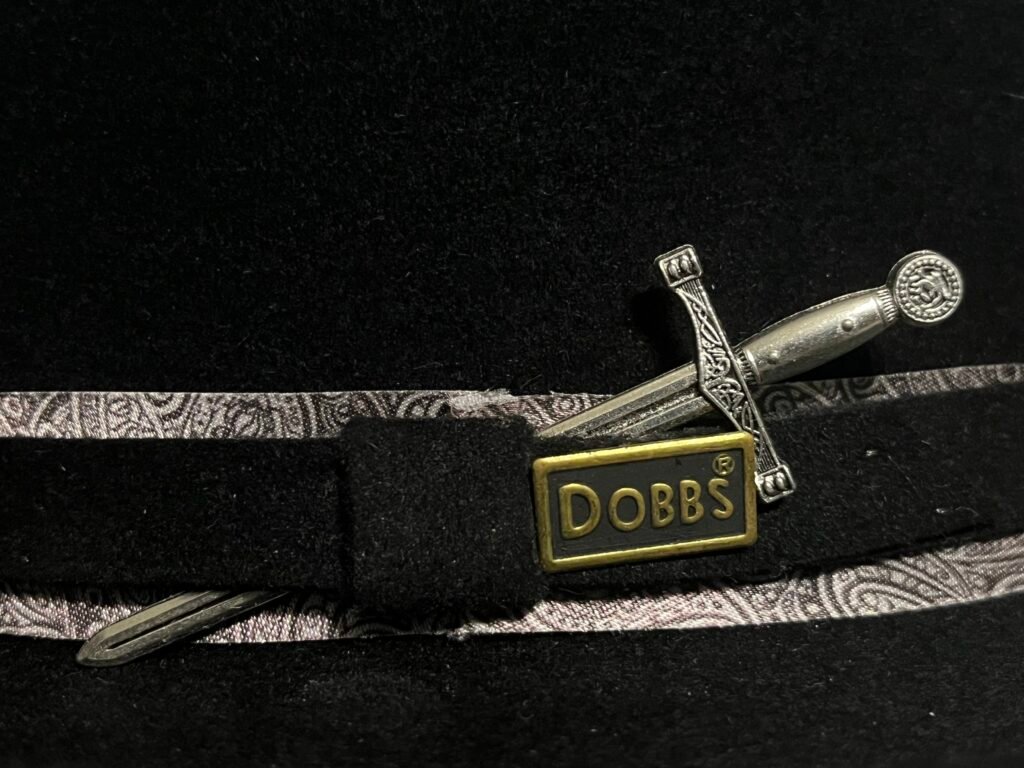
Within the workshop record, PM-26-005 therefore acquired another name: The First Sword.
Finished Hat
Final Style: Pork Pie
Crown: Approximately 3½-inch telescope
Material: Genuine Fur Felt
Factory Size: 60 / 7½
Original Components Retained: Sweatband, self-felt band, Dobbs ornament
Replacement Component: Paisley liner
Custom Trim: Paisley accent made from liner offcut
Signature: Maker’s Sword ornament
Disposition: Personal Collection
Fit: Size Is Not Shape
The Dobbs is factory marked 60 / 7½, very close to my measured head circumference, yet it still does not fit my head perfectly. The project became an early practical demonstration that nominal hat size does not completely describe fit.
Circumference tells only part of the story. The actual oval and contours of an individual head also matter. That realization became one of the reasons I began studying traditional fitting tools such as the conformateur.
Lessons Learned
- A finished vintage fur-felt hat can tolerate meaningful reshaping when steam and handling are applied carefully.
- Wear testing can be part of the making process rather than something that occurs only after a project is considered finished.
- Crown uniformity and brim-shape retention may require more than one shaping session.
- An intact original component is not necessarily the right component for the wearer; comfort matters.
- Material removed during an alteration can sometimes become a useful design element rather than waste.
- Small changes in trim can substantially alter the visual character of a hat.
- Nominal hat size and actual head fit are not the same thing.
- Documenting revisions and dissatisfaction can be more useful than presenting a project as though everything worked perfectly on the first attempt.
Related Records & References
Workshop Observation
WO-001 — Reopening a Vintage Felt Hat Without a Blocking Cord
Technical Reference
ST-750 Steam Boiler Iron
Knowledge
Conformateur
Brim Flange
Project Media
Long-form project video and selected short-form clips are planned from the 4K footage recorded during the conversion.